The objective of the virtual public meeting is to provide information and receive public comments on agenda items and draft U.S. positions to be discussed at the upcoming 49th Session of the Codex Committee on Food Labeling (CCFL49).
The company says the recall is being issued “under protest” and “as a path forward,” while continuing to contest the epidemiological evidence provided by FDA.
Effective July 1, HB 1153 bans the sale of milk products produced through cell-culturing and sets forth labeling requirements for products containing cell-based, insect-based, or plant-based protein.
Arguing that states’ authority to require pesticide health warnings is critical to filling gaps in EPA oversight and risk communication, a coalition has filed an amicus brief in the U.S. Supreme Court case Monsanto v. Durnell, in which Monsanto (now Bayer), the maker of glyphosate-based Roundup, seeks to strike down that authority.
The 28th session of the Codex Committee on Residues of Veterinary Drugs in Foods made advances related to maximum residue limits (MRLs), extrapolation approaches, and risk management guidance, with several measures forwarded to the Codex Alimentarius Commission for adoption.
The list of data, method, and research needs spans microbiological and chemical safety, nutrition, risk assessment, and other areas. It is intended to guide researchers who are interested in pursuing impactful food safety research.
EPA has announced its sixth Contaminant Candidate List, which includes PFAS, microplastics, pharmaceuticals, disinfection byproducts, and other chemicals and microbes. Concurrently, HHS unveiled its Systematic Targeting Of MicroPlastics (STOMP)
initiative to address and understand microplastics in the human body.
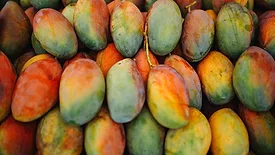
Redacted details include the importer of the implicated mangoes, the country in which the mangoes were grown, and the number and names of states in which outbreak cases were reported.
The Food Standards Australia New Zealand (FSANZ) Board has approved new requirements for the sale of caffeine and guarana extract, as well as restrictions on adding caffeine to foods, addressing public health concerns related to excessive caffeine intake.
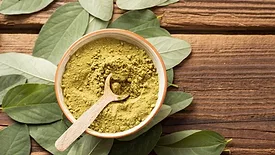
Although FDA was unable to find a cause of contamination, a single supplier of the contaminated moringa powder was identified. Affected products, which were sold under the Rosabella brand and distributed by Ambrosia Brands LLC, have been recalled.
 RSS
RSS